

.jpeg)
Stop Creating Heroes, Build Systems
Binod Subedi
.gif)
I am writing this reflection while on vacation.

Like many Nepalis living abroad, I often use quiet moments to read, reflect, and think about our diaspora communities and how we can make them stronger, more responsible, and more inclusive.
Recently, I read two articles published in Nepal Touch discussing the challenges faced by Nepali students in Canada, emergency situations, deaths, fundraising, and the role of community volunteers. One article highlighted a painful reality: despite thousands of dollars being spent on foreign education, many Nepali families continue to face uncertainty when tragedy strikes. The article questioned why there is still no permanent system for emergencies and why communities repeatedly depend on fundraising during moments of unimaginable pain.
Another article shared the experiences of volunteers who have spent their personal time supporting students, families, and individuals during difficult circumstances.
Both perspectives are important. Both reveal a reality. Our diaspora communities have compassionate people who want to help. But they also reveal a deeper question: Are we building stronger communities, or are we unintentionally creating a culture where people believe they need powerful individuals to solve their problems?
This is not a criticism of genuine volunteerism.
This is a conversation about the type of leadership we want to create. The Difference Between Helping People and Creating Dependency Volunteerism is one of the greatest strengths of any community. When someone receives a phone call from a grieving parent, a struggling student, or a family facing a crisis in a foreign country, responding with compassion is an act of humanity. Such efforts deserve respect.
However, a mature community must also understand the difference between helping someone navigate a system and creating the impression that an individual has the power to control that system. Canada is a country built on institutions, laws, and procedures. A passport is processed through government channels. Legal matters are handled through courts. Employment disputes are handled through labour laws. Insurance decisions are based on policies and evidence. Medical decisions are made by healthcare professionals.
Community leaders can guide people. They can support people. They can connect people with the right resources. But they cannot replace the system.
Community leaders can guide people. They can support people. They can connect people with the right resources. But they cannot replace the system. They cannot override laws. They cannot personally control outcomes. This understanding is extremely important for a diaspora community.
The Problem of the “Fixer” Culture
Many of us come from societies where personal connections and influence often play a major role in solving problems. When we move abroad, sometimes we carry that mindset with us. Instead of asking: “What is the correct process?”
we ask: “Who do you know?”
Instead of understanding institutions, we search for influential individuals. This creates a dangerous culture of dependency. The highest form of leadership is to educate people so well that they no longer need to believe in influential “fixers.”
A great leader does not create followers who depend on them. A great leader creates citizens who understand their rights, responsibilities, and options. The purpose of community leadership should not be to make people believe: “Without this person, nothing is possible.”
The purpose should be to show people: “You are capable. You understand the system. You can move forward.”
When Recognition Creates the Wrong Message
During difficult situations, volunteers often receive public appreciation—flowers, flower garlands, khadas, abir, and emotional recognition from the community. Such gratitude should not be criticized.
People naturally want to thank those who stand beside them during painful moments. However, appreciation must always come with transparency. The concern begins when social media presentations create a different impression from reality.
Sometimes, the story presented publicly highlights an individual as the person who achieved the outcome, while the actual result came from legal processes, government institutions, insurance policies, professional services, and the efforts of multiple people.
Helping someone reach the correct process is meaningful. But creating the impression that personal influence changed the outcome creates unrealistic expectations.
A responsible leader should be able to say: “I did not solve the problem. I helped the person understand the process.” “I did not influence the institution. I helped the person reach the institution.” “I did not replace the system. I helped someone navigate the system.” This honesty does not reduce leadership.
It strengthens it.
The Culture of Creating Heroes
One of the deeper challenges in our society is our tendency to create heroes. We often elevate individuals quickly. Political leaders become symbols of salvation. Social figures become larger than life. Community personalities become people whom others believe can solve every problem. This culture has caused challenges in Nepal, and we should be careful not to recreate the same patterns in our diaspora communities.
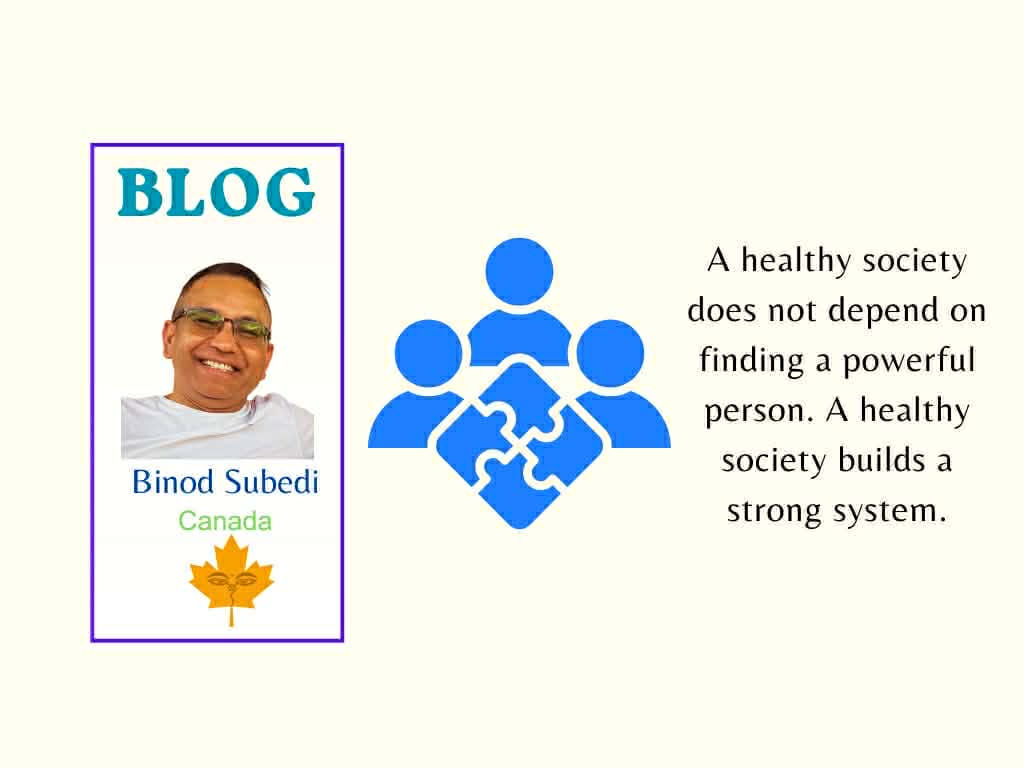
A healthy society does not depend on finding a powerful person. A healthy society builds a strong system.
healthy society does not depend on finding a powerful person. A healthy society builds a strong system.
The question should not be: “Who is our hero?”
The question should be: “Is our system strong enough that we do not need heroes?”
A strong organization does not depend on one president, one board member, or one influential person. It depends on transparent procedures, accountability, knowledge, and continuity. The greatest achievement of a leader is not becoming irreplaceable. The greatest achievement is building something that continues successfully without them.
Leadership: Service or Status?
Another important conversation is about why some individuals seek leadership positions. Many people enter leadership because they genuinely want to serve. Their contribution should be respected.
However, leadership positions can also bring recognition, visibility, and influence. This creates a responsibility for anyone seeking leadership. They must honestly ask themselves: Am I serving people, or am I building my own image?
Am I creating informed citizens, or am I creating followers? Am I strengthening institutions, or am I strengthening my personal influence? A community leader should not measure success by how many people need them.
A community leader should measure success by how many people become independent because of their work.
Why Are Many Professionals Staying Away?
Another question deserves attention: Why do many professionals and ordinary community members choose to contribute through local organizations rather than larger diaspora political structures? The answer may not be that they do not care.
Many people actively volunteer. Many contribute quietly. Many serve their communities without seeking titles. Perhaps the issue is the perception that some leadership structures focus more on visibility, elections, influence, and recognition than on institution-building.
A diaspora organization must create an environment where people participate because they believe in the mission—not because they want status.
A community organization should not become a platform for creating a small group of influential personalities. It should become a platform for empowering everyone.
The Need to Separate Community Service From Politics
A diaspora community represents people with different political opinions, backgrounds, and experiences. A community organization should belong to everyone. When organizations become closely associated with political identities from Nepal, they risk losing trust among people who want neutral community service. The purpose of diaspora organizations should not be to continue political divisions from Nepal to abroad.
The purpose should be to build communities based on:
● Transparency.
● Accountability.
● Inclusion.
● Education.
● Respect for institutions.
The Future We Should Build
The future of the Nepali diaspora should not depend on personalities. It should depend on knowledge. Not on influences but on empowerment. Not on heroes but on capable citizens.
A strong community is not one where everyone knows a powerful person. A strong community is one where everyone knows the system. We should appreciate volunteers. We should respect those who serve. But we should also demand a higher standard of leadership.
The greatest legacy of a diaspora leader should not be: “People remember me because I solved their problems.”
The greatest legacy should be: “People remember me because I helped them become capable of solving their own problems.”
The future of our diaspora depends on one important transformation: Moving from hero worship to system building. Because the strongest communities are not built by people who make themselves necessary. They are built by leaders who make their communities stronger, wiser, and more independent.
-Kelowna, BC
.gif)

 सम्बन्धित खबर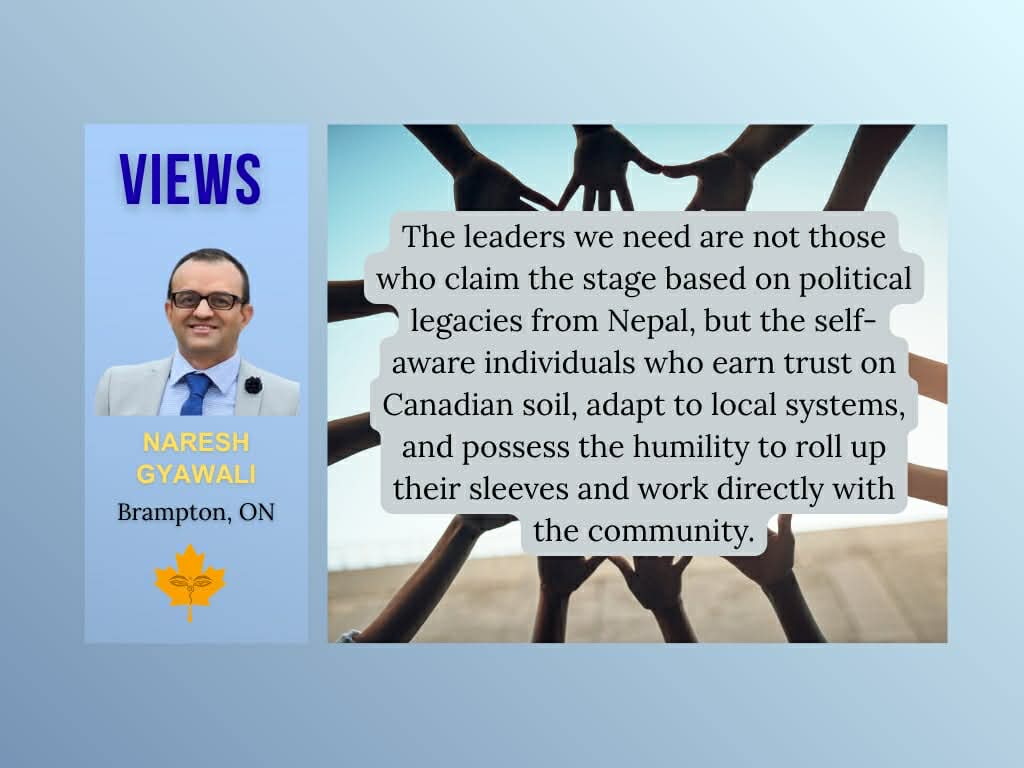






.png)

.png)
.png)
.png)




तपाईंको प्रतिक्रिया